How to choose the right stallion for your breeding?
How to choose a stallion for your mare? Discover the essential criteria for a successful crossbreeding: genetics, morphology, performance and complementarity.
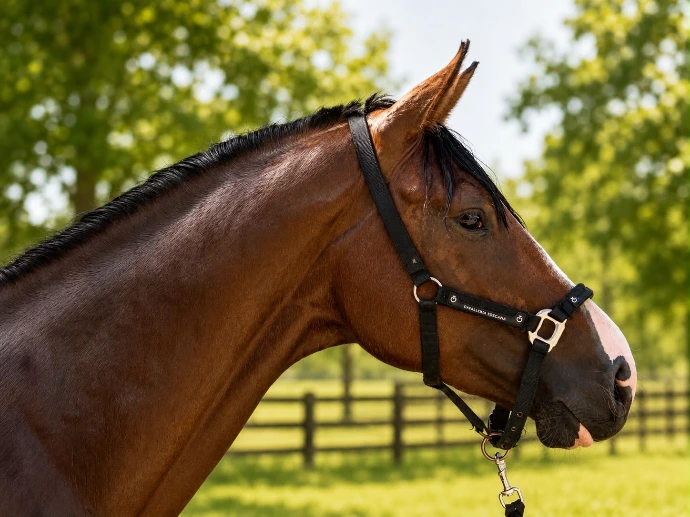
Choosing the stallion: a strategic decision for the future of the foal
Choosing a stallion for your mare is an exciting step, but also a crucial one for any breeder.
Each crossbreeding is a long-term consideration. The goal is not simply to bring together two horses with good pedigrees, but to create a future foal that possesses the desired qualities for the sport.
In the breeding of competition horses, the choice of stallion is based on a precise analysis: what qualities do we want to pass on? What aspects do we want to improve? What will be the plan for the future horse?
At Van de Paddenborre, the selection of stallions is part of an approach based on performance, genetics and the search for horses capable of evolving at the highest level.
1. Understand the qualities of your mare before choosing a stallion
The first mistake when choosing a stallion is often to focus solely on its reputation.
A stallion known for its performance can produce excellent horses, but it must primarily be suited to the mare.
Before choosing a crossbreeding, it is essential to analyse:
- the morphology of the mare;
- her sporting qualities;
- her character;
- her origins;
- her potential weaknesses.
Every horse has its own characteristics.
A mare with a lot of blood may, for example, be paired with a stallion that brings more stability and ease. A mare lacking power may be directed towards a lineage known for its strength and ability to jump.
The best cross is often the one that creates a balance between the two parents.
2. The importance of pedigree and sport lineages
In the breeding of sport horses, pedigree is a valuable source of information.
The origins allow for the identification of certain genetic trends:
- ability to jump;
- quality of movement;
- intelligence in effort;
- respect for the poles;
- sporting longevity.
The great international lineages are often sought after for their ability to pass on recognised sporting qualities.
However, a prestigious pedigree should never be considered alone.
A horse from excellent origins must also confirm its potential through its own qualities, its conformation and its behaviour.
Genetics is a foundation, but it is the combination of genetics, environment and training that builds a true sport horse.
3. Choosing a stallion according to the desired objective
The choice of stallion also depends on the future objective of the foal.
Expectations may vary depending on the project:
A future high-level horse
For an ambitious sporting programme, breeders will often look for:
- proven lines in competition ;
- a high technical quality ;
- power ;
- respect ;
- a mindset suited to performance.
A horse intended for amateurs
For an amateur rider, other qualities may be prioritised :
- ease of use ;
- balance ;
- calm ;
- generosity ;
- consistency.
An excellent horse is not just one that has the most physical means. It is one that perfectly matches its future rider.
4. Morphology: seeking complementarity
The physical analysis of the future cross is an essential element.
The chosen stallion should ideally provide complementarity to the mare.
The observed criteria may particularly concern :
- size ;
- overall balance ;
- the top line ;
- the limbs ;
- the quality of the paces ;
- the jumping technique.
The goal is not to seek a perfect copy of a parent, but to build a balanced horse.
A good breeder always thinks about the next generation: what qualities will be passed on and how can they be expressed in the foal?
5. Character: a quality often underestimated
Sporting success does not solely depend on physical abilities.
The horse's mindset is a fundamental element.
The qualities sought in a sport horse include, in particular:
- the desire to learn;
- confidence;
- the ability to handle pressure;
- concentration;
- generosity in effort.
A horse with great abilities but difficult to use may have a limited career.
In contrast, a willing and intelligent horse in its work can progress quickly and build a long sporting career.
6. The performance of the stallion: an important indicator
The sporting results of a stallion provide valuable information.
A stallion that has performed at the highest level or has produced quality horses demonstrates a certain ability to transmit.
It is interesting to study:
- its personal performances;
- the results of its production;
- the consistency of its offspring;
- the types of horses it produces.
The quality of a breeder is measured as much by its own journey as by what it transmits to the next generation.
7. The support of a specialist to make the right choice
Choosing a stallion can quickly become complex given the large number of possibilities available.
The experience of a specialised breeder provides an external and objective perspective.
A professional can help analyse:
- the strengths and weaknesses of the mare;
- the goals of the future foal;
- the crossings already made;
- the adapted lines.
This approach helps to avoid a choice based solely on the popularity of a stallion and to prioritise a genuine breeding logic.
Conclusion: a good cross is above all a reflection
The choice of a stallion is a strategic step in creating a future sport horse.
The success of a cross relies on a balance between genetics, physical complementarity, character and sporting objective.
At Van de Paddenborre, each choice of stallion is part of a long-term vision: to create balanced, high-performing horses capable of writing their own story in sport.
Do you wish to choose a stallion's semen for your mare?
Our team supports you in finding the most suitable cross for your breeding project.
Discover our available stallions or contact us for personalised advice.